Free ADHD app: an honest comparison of every approach (2026)
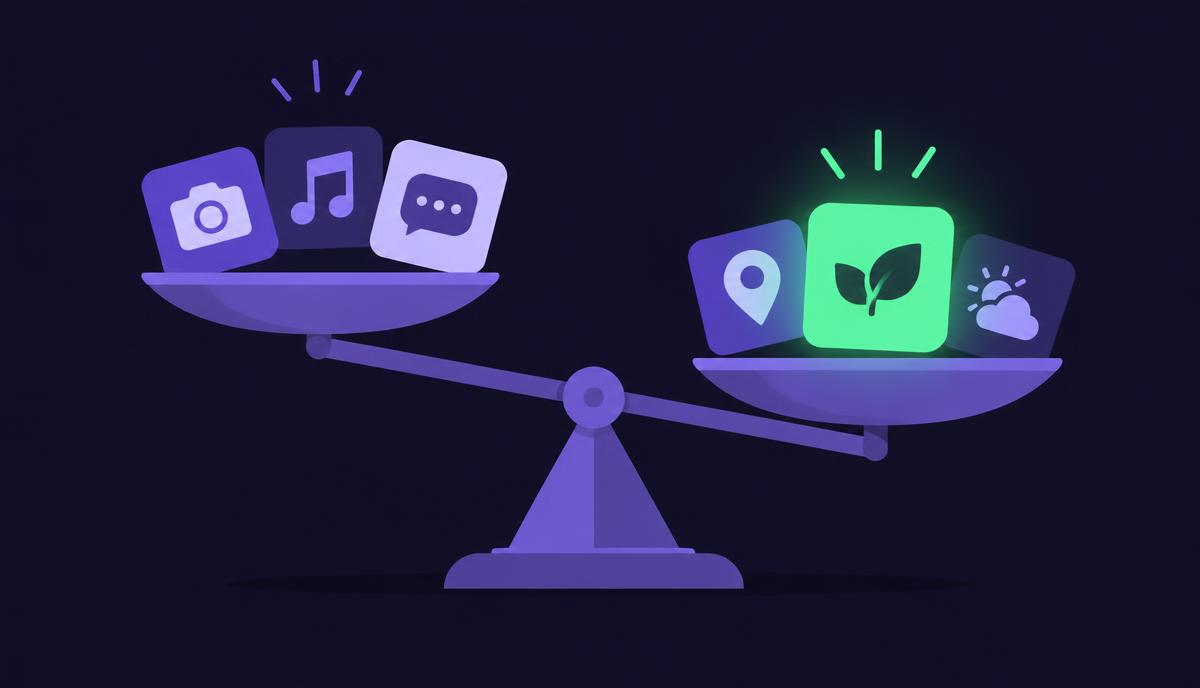
Key takeaway: The best ADHD app isn't the one with the most features: it's the one that cuts the number of decisions between you and action. Free doesn't mean limited.
Searching "ADHD app" returns dozens of results: to-do lists, timers, habit trackers, focus games. Most were designed for neurotypical brains. Here's an honest comparison of the main approaches — their strengths, their limits, and how to choose.
The 4 criteria that actually matter for ADHD
Before comparing apps, set your criteria. For an ADHD brain, four things separate "installed" from "actually used":
- How many decisions the app asks before you act (fewer = better)
- The size of proposed actions (minutes, not hours)
- Failure handling: what happens when you miss 3 days?
- Time to first win: how much setup before your first success?
Approach 1: to-do lists (Todoist, Any.do…)
✅ Strengths: great for brain-dumping, sharing, and planning complex projects.
❌ ADHD limits: they assume you can prioritize and start. The growing list becomes a wall of guilt. Abandonment rates among ADHD users are massive.
👉 Great as a complement (storage), rarely enough alone (starting).
Approach 2: timers and habit trackers (Forest, Habitica…)
✅ Strengths: timers create artificial urgency; gamification adds immediate reward — two genuine ADHD levers.
❌ Limits: 25-minute Pomodoros are often too long to start. Punitive trackers (lost streaks, dead trees) turn one bad week into permanent abandonment.
👉 Effective during action, but they solve neither choosing nor starting.
Approach 3: micro-action apps (BrainSnack)
✅ Strengths: built for the exact point where ADHD blocks — starting. One single 1, 3, or 5-minute action, zero choice, zero list. Recovery after failure is part of the design (smaller action, calm message).
❌ Limits: no complex project management or calendar — that's not their job.
👉 The most direct approach if your #1 problem is "I can't get started".
Free vs paid: what actually changes
A good free ADHD app must cover the essentials: start an action, follow an intention, recover after a gap. Beware free versions that lock the core feature behind a paywall — it signals an app designed to convert, not to help.
Premium should pay for comfort (personalization, stats, advanced content), not dignity (recovering after a failure should never cost money).
How to choose (3 questions)
1. Is my main problem starting? → micro-action app.
2. I start but can't sustain? → timer + gentle gamification.
3. I lose ideas and projects? → to-do list as a complement.
And the ultimate test: install, do one single action, and notice how you feel. A good ADHD app is recognizable by this — it relieves you within the first 5 minutes.
Try BrainSnack
One ADHD-friendly action at a time. No to-do lists, no guilt. Take the free 2-min ADHD quiz →
Take the free ADHD quiz →Frequently asked questions
Can an app replace ADHD treatment? No. No app diagnoses or treats ADHD. They're organization tools that complement any medical follow-up — never substitutes. If in doubt, consult a healthcare professional.
Why do most productivity apps disgust me after a week? Because they rely on discipline (maintaining a system) rather than design (making action easy). A system needing 10 minutes of daily maintenance is a dead system for an ADHD brain.
Do I need to pay for an effective ADHD app? No. The core mechanisms — micro-actions, timer, choice removal — have no reason to be paid. Premium is justified for advanced personalization and tracking, not for the essentials.