ADHD Neuroscience in 2026: what we actually know now
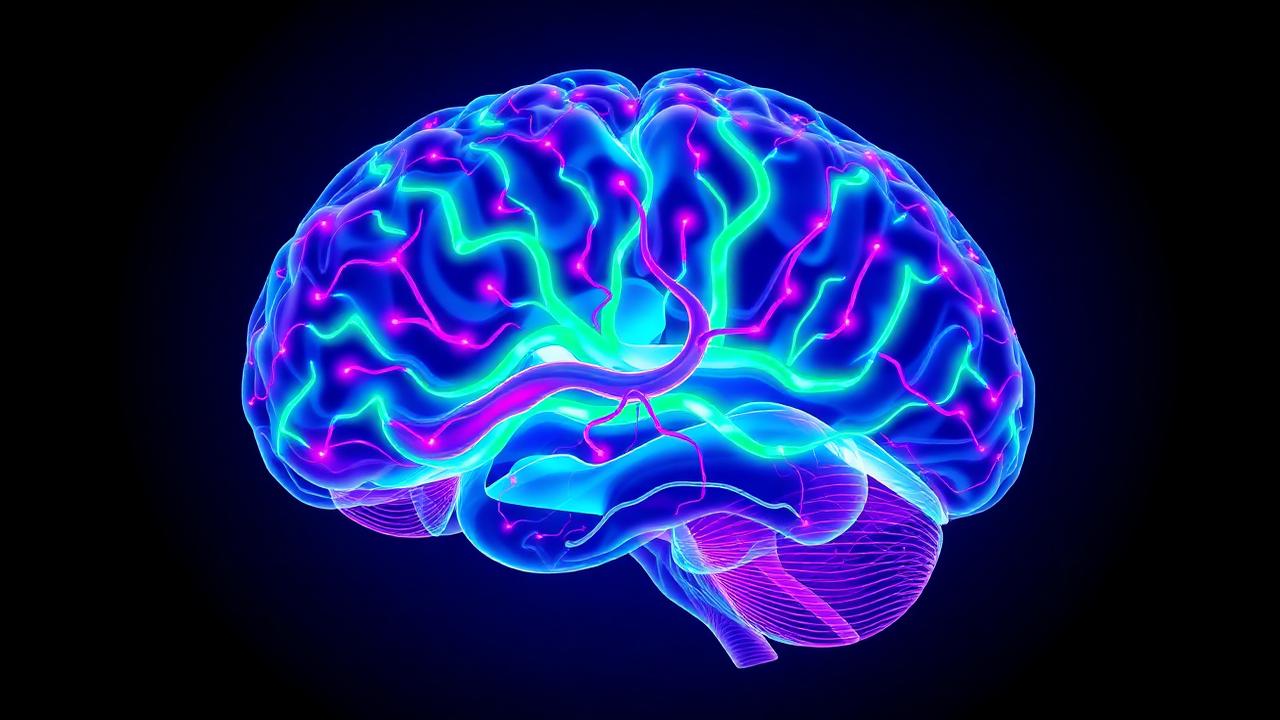
Key takeaway: ADHD isn't an attention disorder. It's a regulation disorder of attention, emotion and time. This nuance changes every strategy that works.
We long thought ADHD was a kids' disease that hyperactive children « grow out of ». The 2024-2026 science tells a very different story: a distinct lifelong neurology with specific superpowers and challenges. Here are the 7 game-changing findings.
1. ADHD is NOT an attention deficit
The name is misleading. Recent fMRI studies (Castellanos & Aoki, 2024) confirm ADHD is a regulation deficit of attention, not an absence of attention.
ADHD attention is very active — but it lands on what stimulates (notification, danger, interest), not what we voluntarily decide.
A more accurate term would be VAST (Variable Attention Stimulus Trait), proposed by Drs Hallowell and Ratey.
2. The ADHD brain is structurally different
ENIGMA-ADHD meta-analyses (Hoogman, 2023) on 4000+ brains show:
- Prefrontal cortex 5-10% smaller on average
- Striatum (reward) less active
- Default Mode Network hyperconnected (easy daydreaming)
- Different cerebellum and amygdala (emotional regulation)
Conclusion: it's not « in your head ». It's physically in your head.
3. It's 70-80% genetic
ADHD is one of the most heritable psychiatric conditions, comparable to height (Faraone & Larsson, 2019).
If one of your parents has ADHD, you have ~50% chance. If both, ~80%.
Consequence: ADHD isn't caused by screens, sugar, your upbringing, or divorced parents. Those factors can worsen it, not create it.
4. ADHD is also an emotional disorder
DSM-5 criteria don't mention emotion. Yet 70% of ADHD adults suffer emotional dysregulation (Shaw et al., 2014).
Concretely: emotions arrive 3-5x stronger and pass 2-3x faster than in neurotypicals.
That's also why RSD (Rejection Sensitive Dysphoria) is so common in ADHD.
5. You live in one time: now
ADHD people have time blindness demonstrated by Barkley: only the immediate present truly exists. The future is abstract, hence not motivating.
That's why distant deadlines do nothing, but a 2-hour deadline puts you in hyperdrive. The future only exists when it becomes present.
Solution: externalize time (visual timers, wall calendars, spatial alerts).
6. Comorbidities are the rule, not the exception
75% of ADHD adults have at least one associated condition:
- Anxiety (50%)
- Depression (30%)
- Sleep disorders (60%)
- Dyslexia / dyscalculia (30%)
- Autism spectrum (25%)
If you recognize yourself in several, it's not that you stack problems. Your brain just works globally differently.
7. The ADHD brain stays highly plastic in adulthood
Good news: brain plasticity studies (Doidge, 2024) show the adult ADHD brain responds better than average to targeted training.
Physical exercise, quality sleep, adapted meditation and repeated micro-actions build new neural connections within weeks.
You're not doomed. You're equipped for evolution.
Try BrainSnack
One ADHD-friendly action at a time. No to-do lists, no guilt. Take the free 2-min ADHD quiz →
Take the free ADHD quiz →Frequently asked questions
Can ADHD appear in adulthood? No, never. ADHD is neurodevelopmental — it exists since childhood. But it can be diagnosed late, especially in women and inattentive-dominant profiles.
Can ADHD be cured? No, but you learn to manage it very well. Many well-equipped ADHD adults live better than poorly-equipped neurotypicals. It's less a disease than a way of functioning to tame.
Do screens cause ADHD in children? No. Recent studies (Madigan, 2023) show a weak and likely inverse correlation: ADHD kids consume more screens because they seek dopamine. Screens don't create ADHD.
Is ADHD really increasing in the population? Mostly diagnosis is increasing, not prevalence. Awareness, especially in adults and women, uncovers cases that went unnoticed.
Are there ADHD subtypes? Yes, DSM-5 recognizes 3 presentations: inattentive (formerly « ADD »), hyperactive-impulsive, and combined. Recent science suggests these are more phases or contexts than fixed types.